

en
en v
Phone
Cart0 Tickets
Total: 0
Account
Calendar
Search
Menu
X

Katya Kabanova

VenuePrague National Theatre
CalendarSun 31 Jan 2027
Synopsis/Details


Katya Kabanova – Leoš Janáček | Opera


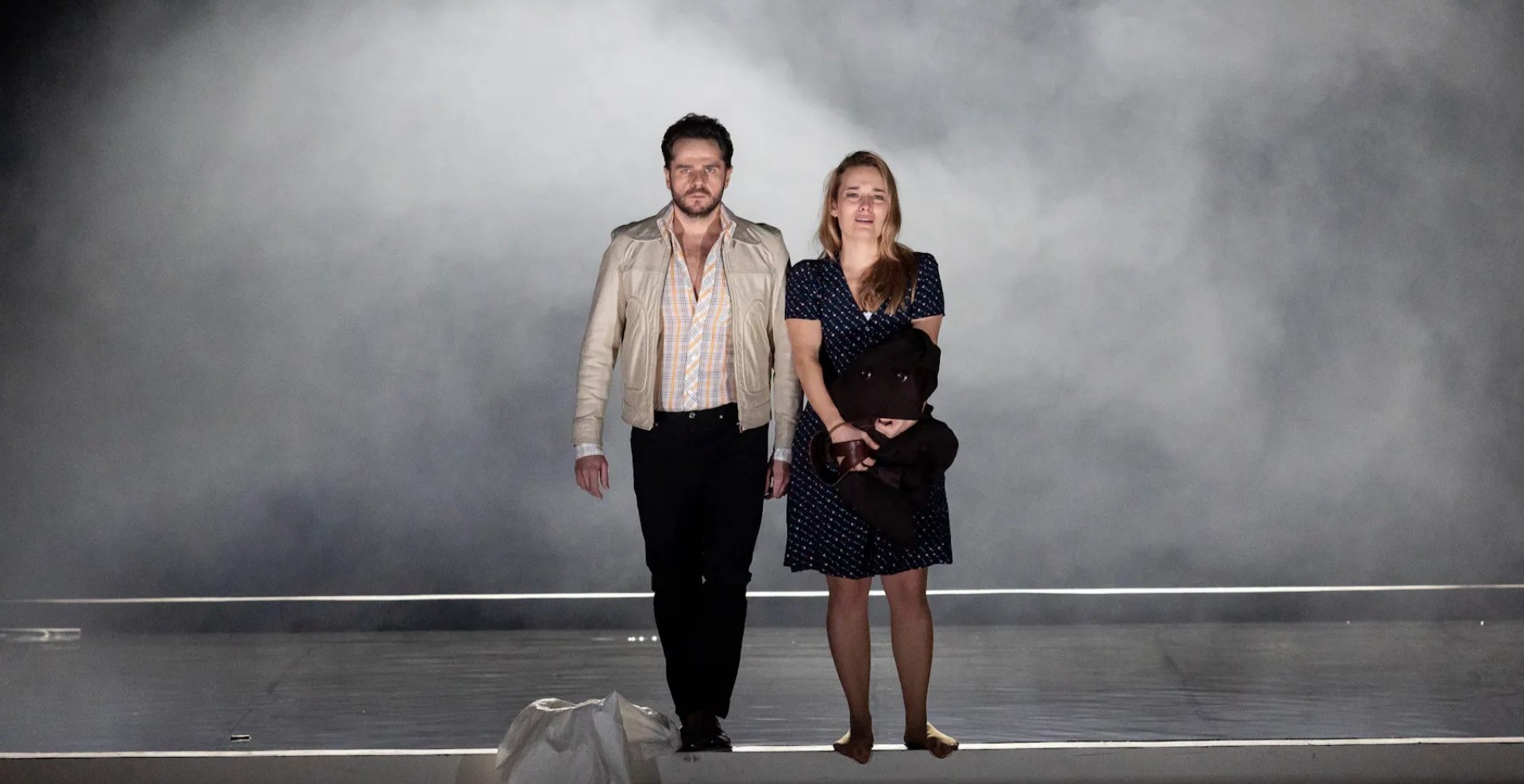
The opera Katya Kabanova, based on A. N. Ostrovsky’s drama The Storm, deeply impresses every perceptive viewer due to its immense emotionality and Janáček’s extraordinary empathy.


Although many in his homeland still consider Leoš Janáček a difficult modernist, all over the world he has long been esteemed as a truly singular classical genius. His opera Katya Kabanova, based on A. N. Ostrovsky’s drama The Storm, deeply impresses every perceptive viewer due to its immense emotionality, attesting to Janáček’s extraordinary empathy. The title heroine, with her dreamy, amorous and heart-wrenching states of mind, is placed in stark contrast with the savage behaviour of those around her. The desperate Katya ultimately finds the solution to her inner conflict between desire and social obligation in the water of the river Volga. The National Theatre in Prague first performed Janáček’s opera a year after its world premiere in Brno in November 1921.


More than a decade since our most recent adaptation, we prepared a new Katya Kabanova production staged by the Spanish director Calixto Bieito, famous for his unorthodox interpretations of classic operas, who has already explored Janáček’s operatic world in his remarkable accounts of Jenůfa in Stuttgart and From the House of the Dead in Nuremberg.


Suitable for audience from 12 years.


Synopsis

Place: The Russian town of Kalinov on the shores of the Volga River

Time: The 1860s


Act 1

Váňa Kudrjáš admires the view of the Volga River, which amuses the more literal-minded housekeeper of the adjoining Kabanov estate. Two men approach, Dikoj and his nephew, Boris Grigorjevič, where Dikoj is berating Boris. Dikoj learns that Kabanicha, the Kabanov family matriarch, is not at home. Dikoj leaves, and Boris explains to Váňa Kudrjáš why he tolerates the abuse: his parents are dead, and to be able to collect his inheritance, he must respect his uncle no matter what his uncle says to him. Boris also tells Váňa Kudrjáš that he is secretly in love with Káťa, the young wife of Tichon. Káťa appears and Kabanicha reproaches her son Tichon – Kaťa's husband – for his inattentiveness. Tichon and Káťa try to calm her down, but Kabanicha will have none of it, telling Tichon that he spoils Káťa. Tichon complains to Varvara, the family's foster daughter, who rebukes him for retreating into drinking more than defending Káťa.


In the house, Káťa tells Varvara of her happy childhood, and dreams of having a man who truly loves her. Tichon enters to say good-bye, as he is journeying to Kazan on business, for Kabanicha. Káťa asks to accompany him or for him not to go, but he insists. Káťa then asks him to make her swear an oath to speak to no strangers during his absence, which puzzles Tichon. Kabanicha announces that Tichon must go, but not before instructing Káťa how to behave in his absence. Tichon dutifully says that Káťa must treat Kabanicha like her own mother and always act properly. He bows to Kabanicha and kisses her and Kát'a before he departs.


Act 2

The women are working on embroidery. Kabanicha criticizes Káťa for not appearing more sorrowful at Tichon's absence. After Kabanicha leaves, Varvara shows Káťa the key to the far part of the garden. Varvara intends to meet Váňa, her lover, there. She hints at the same suggestion for Káťa, and puts the key in her hand. Káťa is hesitant, but then surrenders to fate and will meet Boris. She steps outside as evening comes on. Kabanicha reappears with Dikoj, who is drunk and complaining that people take advantage of his softhearted nature. However, Kabanicha chastises him.


Váňa Kudrjás is waiting for Varvara in the garden. Boris then unexpectedly appears, after receiving a message to go there. Varvara arrives, and she and Váňa go for a walk by the river. Káťa then appears, and Boris declares his love for her. She is at first worried about social ruin, but finally she reciprocates, confessing her secret feelings for him. They embrace and they too leave for a walk. Váňa and Varvara return, as she explains her precautions should Kabanicha suddenly appear. Káťa and Boris are heard in wordless, ecstatic duet as Váňa and Varvara say that it is time to return home.


Act 3

Ten days later

Váňa Kudrjáš and Kuligin are strolling near the river when an approaching storm causes them to take shelter in a ruined building. Other people join them, including Dikoj. Váňa tries to calm Dikoj with scientific explanations about a new invention, the lightning rod. However, this only angers Dikoj, who insists that lightning is not caused by electricity but is the punishment from God. The rain dies down, and people start to leave the shelter. Vána meets Boris and Varvara. Varvara says that Tichon has returned, and Káťa is very agitated. Kabanicha arrives with Tichon and Káťa. The storm returns, and people assume initially that this is what upsets Káťa. However, she confesses to Tichon in front of everyone her assignation with Boris during her husband's absence. Then she runs out into the storm.


Evening approaches after the storm has ended. Tichon and a search party are looking for Káťa. At first among the party, Varvara and Váňa then decide to leave the village for Moscow and start a new life. They leave, and as the searchers continue, Káťa appears. She knows that her confession has dishonoured her and humiliated Boris. She feels tormented and wants to meet Boris one more time. Boris appears and sees her, and the two embrace. Boris says that his uncle is sending him away to another town, but asks her what will become of her. As her sanity deteriorates, she first begs him to be allowed to accompany him, then insists that she could not and bids him farewell; he leaves in sorrow. After thinking of how nature will continue to flourish over her grave, Káťa throws herself into the river. Kuligin sees this from the far bank and calls for help. Tichon appears, followed by Kabanicha. Tichon tries to help Káťa but is restrained by Kabanicha; he blames her for Káťa's suicide. Dikoj appears with Káťa's body and lays her on the ground. Tichon cries over the body as, without any emotion, Kabanicha thanks the bystanders—or, as often done, the audience—for their help.

Approximate running time: 1 hour 30 minutes, no intermission

Language: In Czech, surtitles in Czech, English

Premiere: January 28, 2022

Recommended age: 12+


The opera Katya Kabanova, based on A. N. Ostrovsky’s drama The Storm, deeply impresses every perceptive viewer due to its immense emotionality and Janáček’s extraordinary empathy.

Cast

Cast

Conductor: Robert Jindra

Savjol Prokofjevič Dikoj: František Zahradníček

Boris Grigorjevič: Peter Berger

Marfa Ignatevna Kabanova: Jana Sýkorová

Tichon Ivanyč Kabanov: Jaroslav Březina

Katěrina /Káťa/: Kateřina Kněžíková

Varvara: Arnheiður Eiríksdóttir

Váňa Kudrjáš: Josef Moravec

Kuligin: Miloš Horák

Glaša: Sylva Čmugrová

Fekluša: Marie Svobodová

Walker: Vjacseszláv Korszák

Woman: Lenka Kučerová


Creatives

Stage director: Calixto Bieito

Sets: Aída Leonor Guardia

Costumes: Eva Butzkies

Light design: Calixto BieitoMichael Bauer

Chorus master: Lukáš Kozubík

Dramaturgy: Beno Blachut

Venue
Prague National Theatre

The National Theatre today


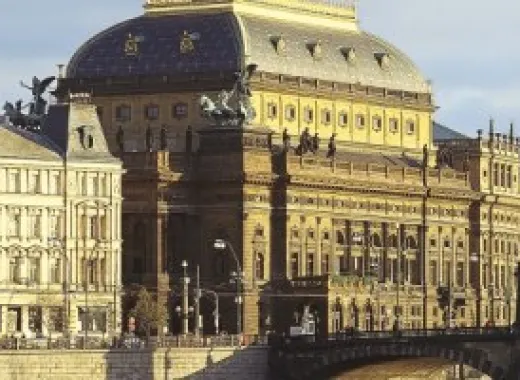
The historical building of the National Theatre, constructed in 1883, is generally considered the prime stage in the CzechRepublic. It is the flagship of the National Theatre institution, today amounting to five buildings and encompassing four companies. You can see there Opera, Drama and Ballet performances.


Practical information


Where to buy tickets

When purchasing tickets online, you will receive an e-ticket, which does not need to be printed—you can simply present it on your device upon entry. When available, you may also choose to collect printed tickets from the National Theatre box offices, and any tickets purchased directly at the box office will be issued in physical form.

The National Theatre sells tickets up to 6 months in advance.
Sales always start on the 1st day of the month at 9am, except in January when pre-sales do not start until the 2nd day due to a public holiday.


When do the doors open prior the show?

The National Theatre, The State Opera and the Estates Theatre are open 45 minutes prior the performance in time of increased hygiene practices. The evening box offices are open at the same time.

The main box office at the New Stage on play days is open until the beginning of the show. The New Stage auditorium is open 30 minutes prior the performance.


What kind of dress is suitable for attending the theatre?

Dress codes are only required for special events. By their appearance, the visitors indicate that they are aware of the festive occasion they are experiencing at the theatre. Persons in markedly soiled clothes and persons whose behaviour may compromise the safety of the other visitors are not allowed to enter the respective premises, or can be ejected from them.


Where do I park?

While visiting the National Theatre and the New Stage, you are welcome to use the underground National Theatre car park (access from Ostrovní Street). Please note that the parking is subject to a fee.
Only non-cash payments: Parking fees can be paid exclusively by cashless payment card or another virtual device (watch or phone). Thank you for your understanding


Buffets at the State Opera

No waiting. For your benefit, please pre-order your food and beverages at the bar to minimize waiting in the queue!


Accessibility for the disabled

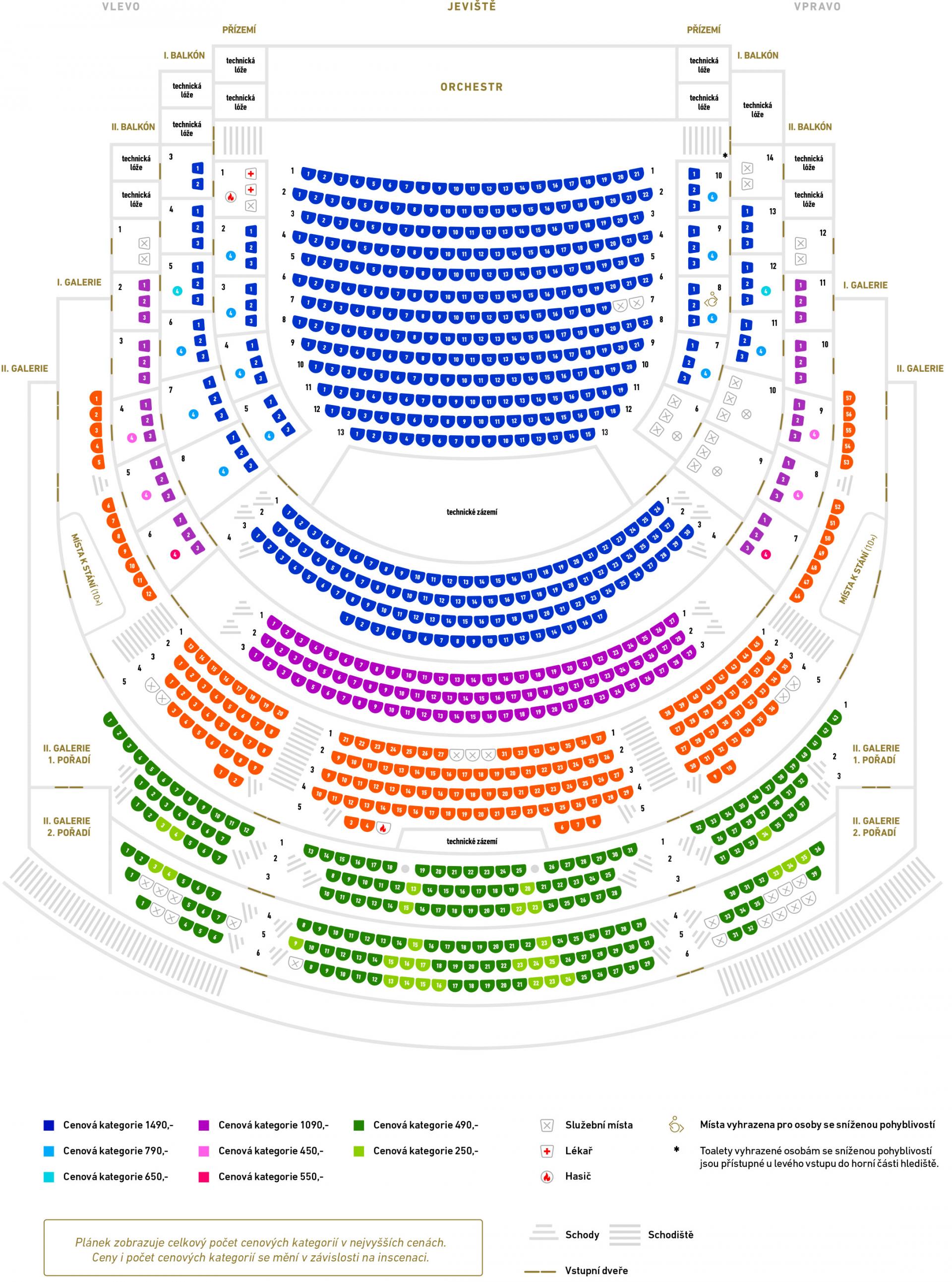
All the National Theatre venues are accessible to disabled persons, with special seats allocated for them in the auditorium. It is, however, advisable to consult each visit in advance with the National Theatre Sales Department.


Can I get an artist’s signature? Can I leave them flowers?

The National Theatre does not provide signatures of artists or contacts to them. You can leave flowers for artists performing in the show before its beginning at the theatre stuff.


Idea of building a stately theatre for the Czech nation


The National Theatre is the embodiment of the will of the Czech nation for a national identity and independence. Collections of money among the broad mass of the people facilitated its construction and hence the ceremonial laying of its foundation stone on 16 May 1868 was tantamount a nationwide political manifestation.


The idea of building a stately edifice to serve as a theatre was first mooted in the autumn of 1844 at meetings of patriots in Prague. It began to materialise through a request for “the privilege of constructing, furnishing, maintaining and managing” an independent Czech theatre, which was submitted to the Provincial Committee of the Czech Assembly by František Palacký on 29 January 1845. The privilege was granted in April 1845. Yet it was not until six years later – in April 1851 – that the Society for the Establishment of a Czech National Theatre in Prague (founded in the meantime) made its first public appeal to start collections. A year later the proceeds of the first collections allowed for the purchase of land belonging to a former salt works with the area of less than 28 acres, which predetermined the magnificent location of the theatre on the bank of the river Vltava facing the panorama of Prague Castle, yet at the same time the cramped area and trapezoidal shape posed challenging problems for the building’s designers.


By tram

By daytime trams Nos. 6, 9, 18 and 22 and night trams Nos. 53, 57, 58, 59 to the stop “Národní divadlo” – in front of the NT historical building; by daytime tram No. 17 to the stop “Národní divadlo”.


By metro

To the station “Můstek”, line B (yellow), and then by foot on Národní street; or to the station “Karlovo náměstí” and then two stops by tram No. 6, 18 or 22 to the stop “Národní divadlo”. To the station “Staroměstská”, line A (green), and then two stops by tram No. 17 to the stop “Národní divadlo”. 

Accomodation

Buy now

Gift vouchers

Gift someone an unforgettable night at the opera.
Choose a gift coupon and let them pick the performance they love—music, drama, and world-class artistry, all in one elegant experience.
Prague Opera Tickets
Instagram
Payment
Ticket search
Google Play
App Store
© 2026 RM EUROPA TICKET GmbH
Whatsapp