
 EN
EN DE
DE IT
IT FR
FR ES
ES RU
RU JP
JP RO
RO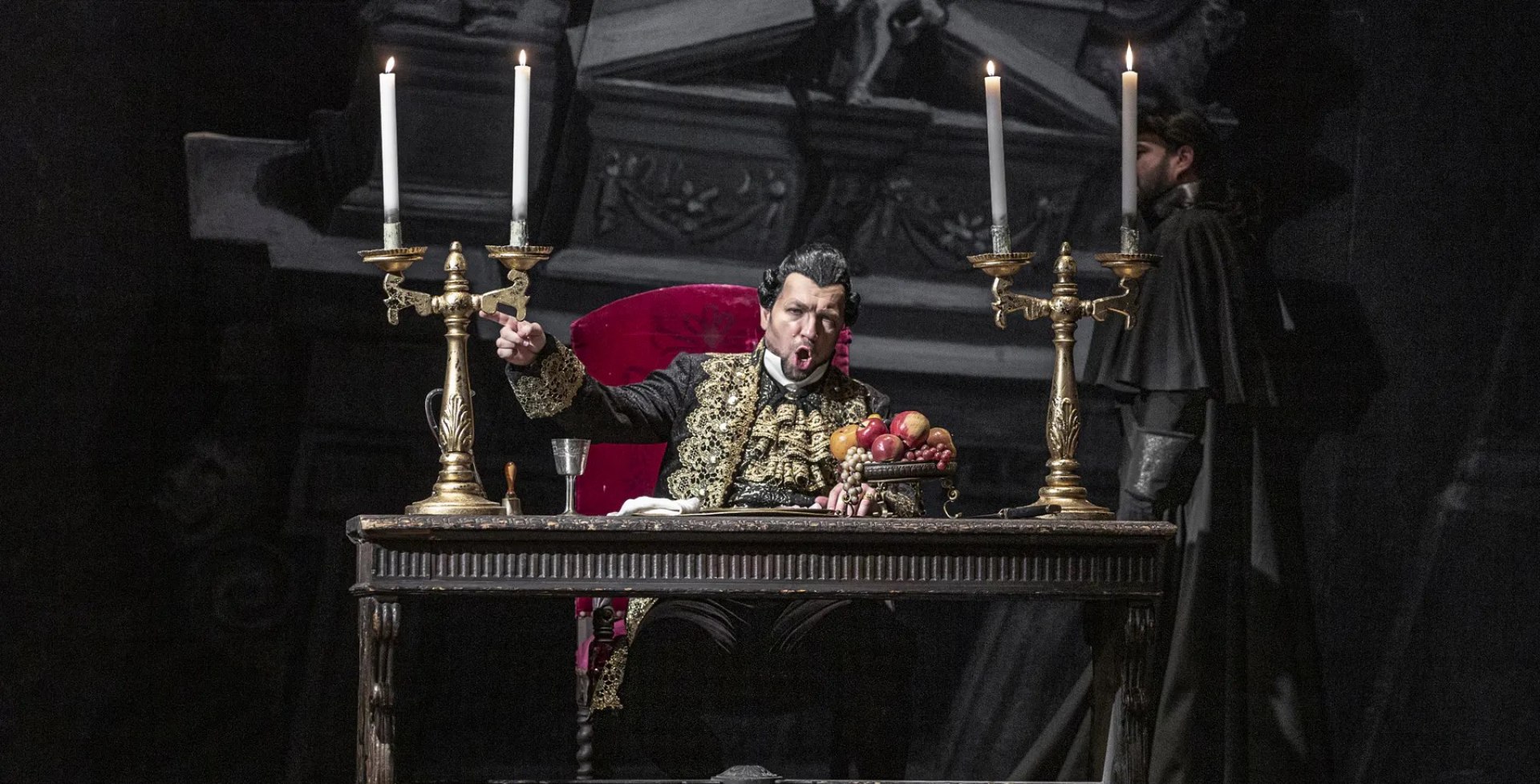
© Patrik Borecký
Tosca
Order tickets
 September 2133 September 2133 | ||||||
|---|---|---|---|---|---|---|
Mo | Tu | We | Th | Fr | Sa | Su |
Tosca – Giacomo Puccini | Opera
Approximate running time: 2 hours 40 minutes, including two 20-minute intermissions
Language: Performed in Italian, with surtitles in Czech and English
Recommended age: 12 and up
The singer Floria Tosca, who is even invited to the royal court, and the painter Mario Cavaradossi are respected and adored artists, yet their standing does not safeguard them against the malicious police chief Baron Scarpia. Cavaradossi dies not only because he, a Voltairean, tries to save the life of Cesare Angelotti, the former Consul of the Roman Republic, but also for being Tosca’s lover, Scarpia’s rival. Giacomo Puccini had mulled over Victorien Sardou’s La Tosca ever since 1889, when he saw in Milan a performance of the drama, starring the celebrated actress Sarah Bernhardt.
The world premiere of his opera, in 1900 in Rome, was a resounding success, even though some did scorn it, including Gustav Mahler, who referred to it as a “Meistermachwerk” (sham masterpiece), and Richard Strauss, who dismissed it in even harsher terms. Today, the opera about the diva Tosca, the painter Cavaradossi and the police chief Baron Scarpia, set in 1800 in Italy during the time of Napoleon’s war against Austria, is one of the most frequently performed operas worldwide.
Synopsis
Act One
The escaped prisoner and former Consul of the Roman Republic Cesare Angelotti runs into Attavanti private chapel and hides. The painter Mario Cavaradossi enters the church to continue his work on a picture of the Mary Magdalene. The Sacristan identifies a likeness between the portrait and a woman, who comes to the church to pray. Tosca arrives. She is furious that Mary Magdalene-painting looks like Marchesse Attavanti, Angelotti’s sister. Cavaradossi succeeds in assuaging her. After Tosca has walked away, Angelotti and Cavaradossi flee to the painter’s house.
The Sacristan and choristers are celebrating rumours of Napoleon’s defeat at the Battle of Marengo. At that moment, the Roman chief of police, Baron Scarpia, arrives searching for Angelotti. Tosca reappears. Scarpia, suspecting Cavaradossi’s complicity in Angelotti’s escape, convinces her that Cavaradossi has run off with another woman. Scarpia knows that Tosca’s jealousy will lead him to Cavaradossi, and thus to Angelotti.
Act Two
In his apartment Scarpia anticipates the pleasure of having Tosca in his power. Having not been able to find Angelotti, Spoletta arrives with news that they have instead brought Cavaradossi. Interrogated by Scarpia, the painter denies any knowledge of Angelotti and is taken away to be tortured. When Tosca arrives, Scarpia begins interrogating her, using Cavaradossi’s screams to torment her; under this duress, Tosca finally reveals the hiding place. Caravadossi’s torture ceases and the painter is brought in. Sciarrone enters with the news that Napoleon was actually victorious at Marengo. Cavaradossi responds with a triumphant exclamation and Scarpia orders his execution.
Alone with Scarpia, Tosca begs for her lover’s life and Scarpia names his price: she must give herself to him. Seeing no alternative, she agrees, and Scarpia orders Spoletta to perform merely a sham execution. Once Scarpia has granted safe conduct for Tosca and Cavaradossi to escape from Rome, Tosca stabs him.
Act Three
A shepherd boy’s song is heard at dawn. Awaiting his execution in prison, Cavaradossi writes a letter to Tosca, recalling their happy moments together. Tosca enters and tells him that she has killed Scarpia. Cavaradossi is deeply touched by her courage. They enthusiastically plan their future life together in freedom. Tosca then instructs Cavaradossi how to feign death in the sham execution. The firing squad arrives. After the men have left, Cavaradossi remains prostrate on the ground. Tosca realises that he really is dead and that Scarpia has deceived her. As Spoletta approaches, so as to detain her for killing Scarpia, she runs to the ramparts and hurls herself to death.
Program and cast
Conductor: Hilary Griffiths; Jiří Štrunc; Antonino Fogliani
Floria Tosca: Petra Alvarez Šimková; Olga Busuioc
Mario Cavaradossi: Kyungho Kim; Peter Berger; Atalla Ayan
Baron Scarpia: Daniel Luis de Vicente; Oleksandr Pušnjak; Daniel Čapkovič
Cesare Angelotti: Pavel Švingr; František Zahradníček
Sagrestano: Ivo Hrachovec; Oleg Korotkov
Spoletta: Zdeněk Haas; Michael Skalický
Sciarrone: Oldřich Kříž; Jaroslav Patočka
Jailor: Alexander Laptěv; Andrey Styrkul
Shepherd: Joshua Alvarez
Libretto: Giuseppe Giacosa, Luigi Illica
Stage director: Martin Otava
Sets: Josef Svoboda
Sets (reconstruction 1999): Daniel Dvořák
Costumes: Josef Jelínek
Light design: Pavel Dautovský
Chorus Master: Zuzana Kadlčíková
Chorus master of the Prague Philharmonic Children´s Choir: Jiří Chvála
Dramaturgy: Jitka Slavíková
State Opera Chorus
State Opera Orchestra
National Theatre Opera Ballet
Prague Philharmonic Children´s Choir
Prague State Opera
The State Opera today
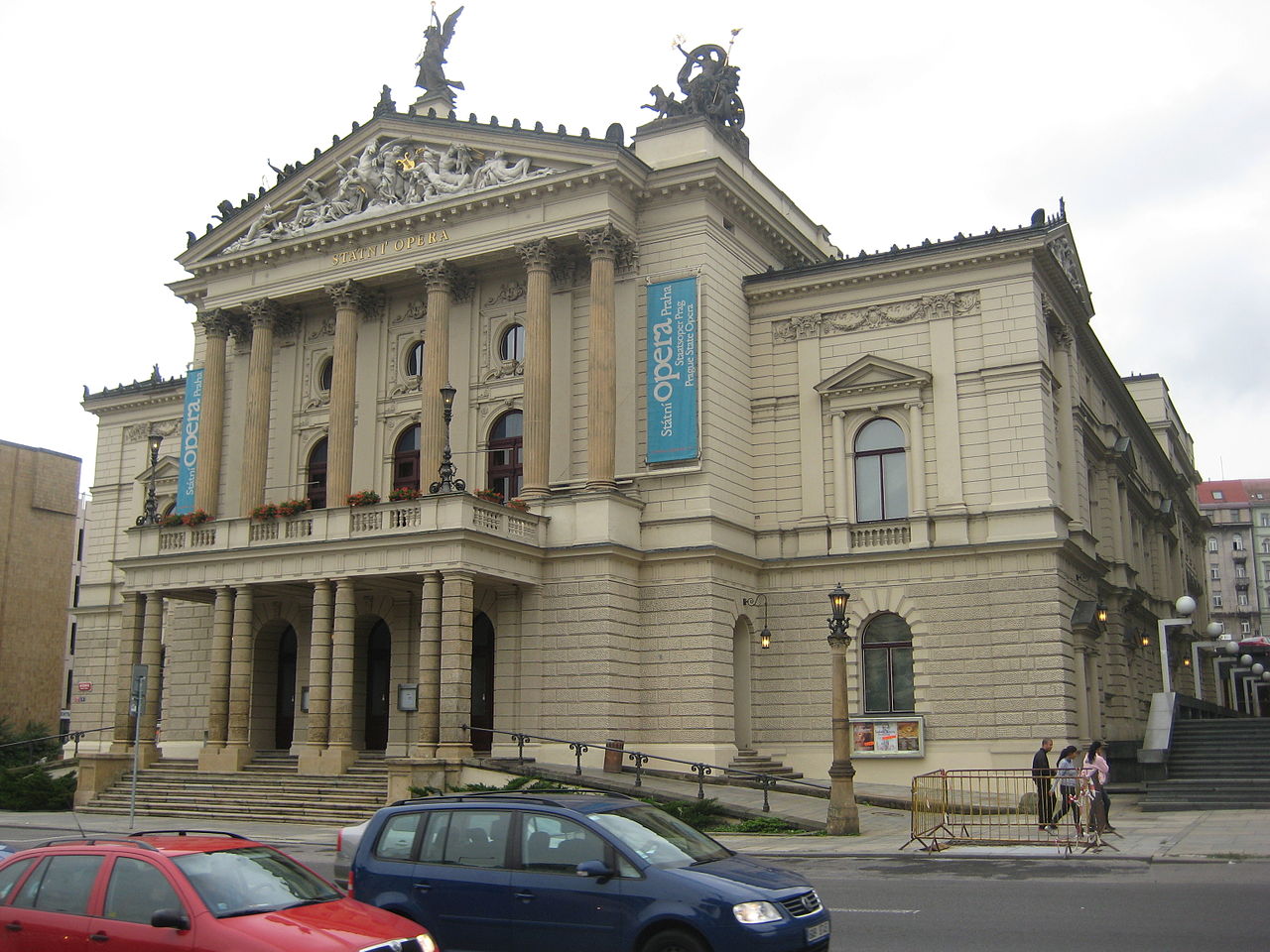
The State Opera (formerly the State Opera Prague, between 1948 and 1992 the Smetana Theatre, and originally the New German Theatre) has been a part of the National Theatre since 2012. The Opera and Ballet ensembles give repertory performances at the State Opera.
Practical information
Where to buy tickets
When purchasing tickets online, you will receive an e-ticket, which does not need to be printed—you can simply present it on your device upon entry. When available, you may also choose to collect printed tickets from the National Theatre box offices, and any tickets purchased directly at the box office will be issued in physical form.
The National Theatre sells tickets up to 6 months in advance.
Sales always start on the 1st day of the month at 9am, except in January when pre-sales do not start until the 2nd day due to a public holiday.
When do the doors open prior the show?
The National Theatre, The State Opera and the Estates Theatre are open 45 minutes prior the performance in time of increased hygiene practices. The evening box offices are open at the same time.
The main box office at the New Stage on play days is open until the beginning of the show. The New Stage auditorium is open 30 minutes prior the performance.
What kind of dress is suitable for attending the theatre?
Dress codes are only required for special events. By their appearance, the visitors indicate that they are aware of the festive occasion they are experiencing at the theatre. Persons in markedly soiled clothes and persons whose behaviour may compromise the safety of the other visitors are not allowed to enter the respective premises, or can be ejected from them.
Where do I park? How much does the parking cost?
While visiting the State Opera, you can take the slip road on Wilsonova street from the left lane close to the State Opera building to the Parking Centrum above-ground garage. The parking fee is 60 CZK/h.
Only non-cash payments: Parking fees can be paid exclusively by cashless payment card or another virtual device (watch or phone). Thank you for your understanding.”
Buffets at the State Opera
No waiting. For your benefit, please pre-order your food and beverages at the bar to minimize waiting in the queue!
Accessibility for the disabled
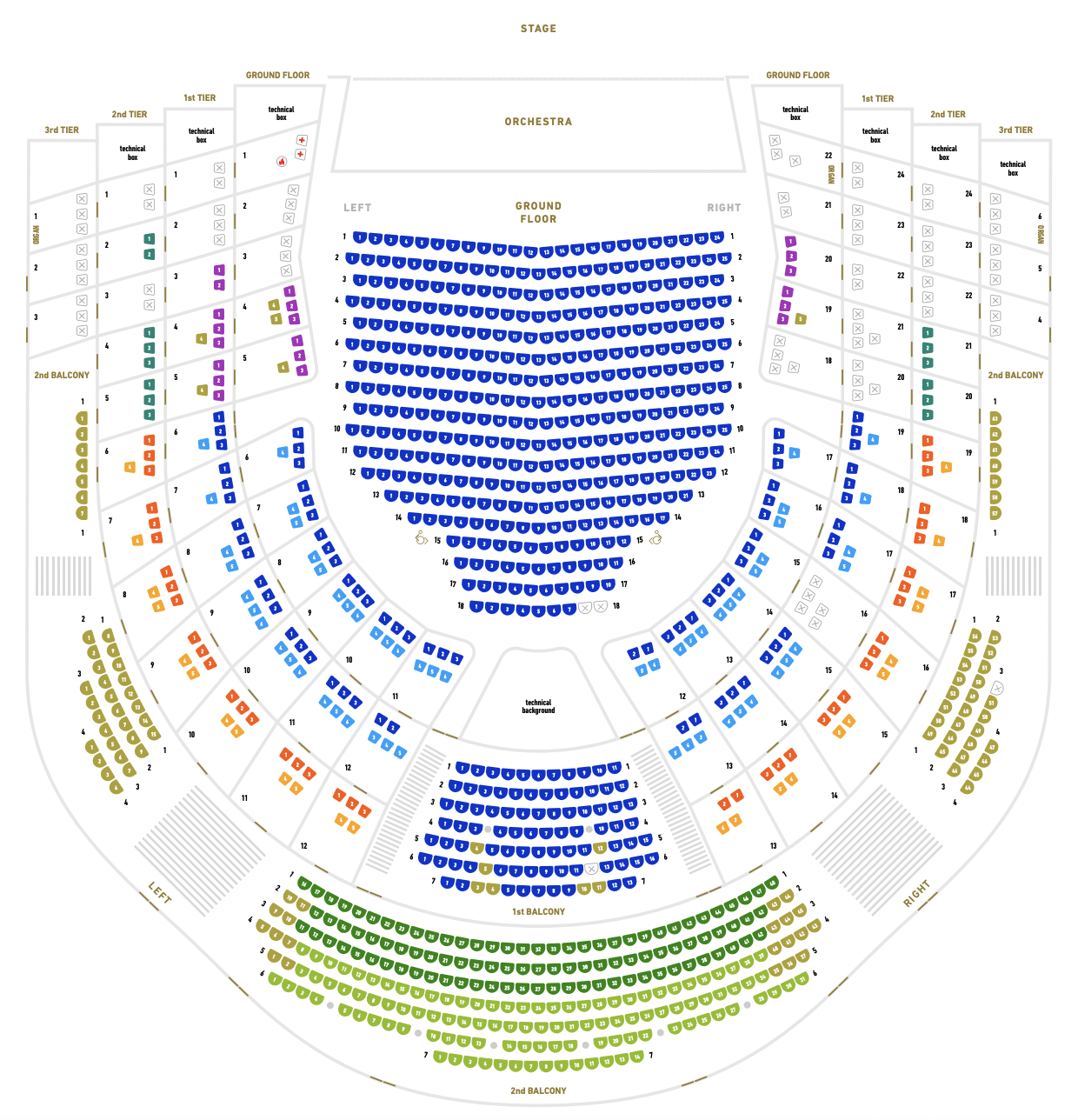
All the National Theatre venues are accessible to disabled persons, with special seats allocated for them in the auditorium. It is, however, advisable to consult each visit in advance with the National Theatre Sales Department.
Can I get an artist’s signature? Can I leave them flowers?
The National Theatre does not provide signatures of artists or contacts to them. You can leave flowers for artists performing in the show before its beginning at the theatre stuff.
History
The Prague State Opera resides in the building which on January 5, 1888 was opened as a Prague German stage with the performance of Wagner’s opera, The Mastersingers of Nürnberg. In the 19th century, Prague Germans performed in the Estate’s Theater in alternation with a Czech company. Desire for their own theater led to negotiations in 1883 for the construction of a new theater building for the German Theater Association. Over the next three years, a blueprint was drawn up and handed over to the Vienna atelier of Fellner and Hellmer. Also sharing in the design was the architect of the Vienna Municipal Theater, Karl Hasenauer, while Prague architect Alfons Wertmüller took part in the construction. Financing came from private collections. With its spacious auditorium and neo-Rococo decoration, this theater building is among the most beautiful in Europe.
Access:
By tram
By daytime tram No. 11 to the stop “Muzeum”, through the underpass beneath Legerova street in the direction of the NationalMuseum, at the crossroads turn right along the NewBuilding of the NationalMuseum.
By daytime trams Nos. 3, 9, 14 and 24 or night trams Nos. 51, 52, 54, 55, 56 and 58 to the stop “Václavské náměstí”, then by foot uphill on the left side of the Wenceslas Square to the traffic lights across Wilsonova and Vinohradská streets. Then turn left along the NewBuilding of the NationalMuseum.
By metro
To the “Muzeum” station, lines A and C (green and red), and then by foot along the NewBuilding of the NationalMuseum.
Related events