
 EN
EN DE
DE IT
IT FR
FR ES
ES RU
RU JP
JP RO
RO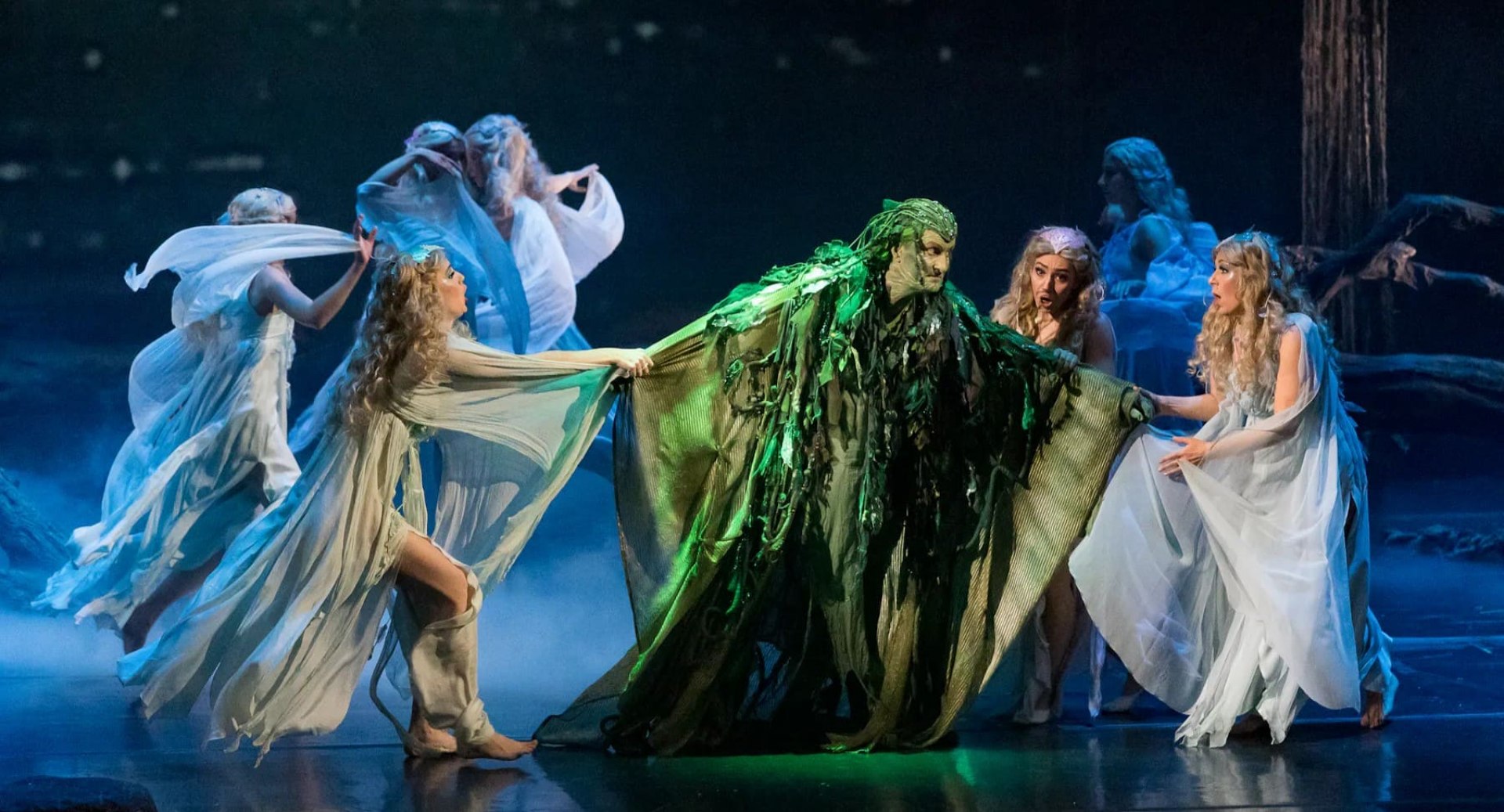
© Zdeněk Sokol
Rusalka
Order tickets
 September 2153 September 2153 | ||||||
|---|---|---|---|---|---|---|
Mo | Tu | We | Th | Fr | Sa | Su |
Rusalka – Antonín Dvořák | Opera
Approximate Running Time: 3 hours 10 minutes, including two 20-minute intermissions
Language: Performed in Czech, with surtitles in Czech and English
Recommended Age: Suitable for audiences aged 6 and up
The fruit of the collaboration between the two great creators, Antonín Dvořák and Jaroslav Kvapil, who were close as artists and friends alike, was a magical, dreamy story of the great, unfulfilled desire of the water nymph Rusalka, a work in which Dvořák’s musical genius reached its apex. The fairy-tale atmosphere inspired the composer to create singular, impressionistic music replete with melodic imagination and masterful instrumentation, a suggestive expression of the play of waves and the reflection of moonlight on the surface of a lake, as well as the overwhelming magic of a fairy-tale dream.
Since its premiere in 2005, the production of Rusalka directed by the distinguished Czech film-maker Zdeněk Troška, has been one of the most popular titles performed at the State Opera.
Synopsis
Act 1
A meadow by the edge of a lake
Three wood sprites tease the water goblin, Vodník, ruler of the lake. Rusalka, the water nymph, tells her father the water goblin that she has fallen in love with a human prince who comes to hunt around the lake, and she wants to become human to embrace him. He tells her it is a bad idea, but nonetheless steers her to a witch, Ježibaba, for assistance. Rusalka sings her "Song to the Moon", asking it to tell the prince of her love. Ježibaba tells Rusalka that, if she becomes human, she will lose the power of speech and immortality; moreover, if she does not find love with the prince, he will die and she will be eternally damned. Rusalka agrees to the terms and drinks a potion. The prince, hunting a white doe, finds Rusalka, embraces her, and leads her away, as her father and sisters lament.
Act 2
The garden of the prince's castle
A gamekeeper and his nephew, the kitchen boy, note that the prince is to be married to a mute and nameless bride. They suspect witchcraft and doubt it will last, as the prince is already lavishing attentions on a foreign princess who is a wedding guest. The foreign princess, jealous, curses the couple. The prince rejects Rusalka. Rusalka then goes back to the lake with her father the water goblin. Though she has now won the prince's affections, the foreign princess is disgusted by the prince's fickleness and betrayal and she scorns him, telling him to follow his rejected bride to Hell.
Act 3
A meadow by the edge of a lake
Rusalka returns to the lake and laments about her fate. She meets Ježibaba and asks for a solution to her woes. Ježibaba gives her a knife and tells her that she can save herself if she kills the prince with it. Rusalka rejects this, throwing the dagger into the lake. Rusalka becomes a will-o'-the-wisp, a spirit of death living in the depths of the lake, emerging only to lure humans to their deaths. The gamekeeper and the kitchen boy are worried about the deteriorating condition of the prince, and go to the lake in order to get rid of Rusalka. They meet Ježibaba and lash out on Rusalka's betrayal, but are rebutted by the water goblin, who says that it was actually the prince that betrayed Rusalka. The wood sprites mourn Rusalka's plight. The prince, searching for his white doe, comes to the lake, senses Rusalka, and calls for her. Rusalka appears and is now able to speak to him. He asks her to kiss him, even knowing her kiss means death. They kiss and he dies; and the water goblin comments that all sacrifices are futile. In her final song, Rusalka tells the prince, "For your love, for that beauty of yours, for your inconstant human passion, for everything by which my fate is cursed, human soul, God have mercy on you!"
Program and cast
Conductor: Anna Pozidis; Ondrej Olos
Rusalka: Olga Busuioc; Petra Alvarez Šimková; Jana Sibera; Veronika Rovná
Prince: Evan LeRoy Johnson; Peter Berger; Aleš Briscein; Martin Šrejma
Water Goblin: Zdeněk Plech; Ivo Hrachovec; Roman Vocel
Witch: Jana Sýkorová; Kateřina Jalovcová; Andrea Tögel Kalivodová
Foreign Princess: Dana Burešová; Tamara Morozová
First Wood Sprite: Ekaterina Krovateva; Yukiko Smetáčková Kinjo
Second Wood Sprite: Sylva Čmugrová; Markéta Cukrová
Third Wood Sprite: Šárka Hrbáčková; Alžběta Betty Vomáčková
Turnspit: Lenka Pavlovič; Jarmila Vantuchová
Gamekeeper: Jan Ježek; Jiří Brückler; Jiří Hájek
Hunter: Jiří Brückler; Jiří Hájek; Jan Ježek
Libretto: Jaroslav Kvapil
Stage director: Zdeněk Troška
Sets: Milan Ferenčík
Costumes: Josef Jelínek
Choreography: Dana Morávková
Chorus Master: Zuzana Kadlčíková
Dramaturgy: Jitka Slavíková
State Opera Chorus
State Opera Orchestra
National Theatre Opera Ballet
Pueri gaudentes boys’ choir
Pupils of the Olga Kyndlová Ballet School
Prague State Opera
The State Opera today
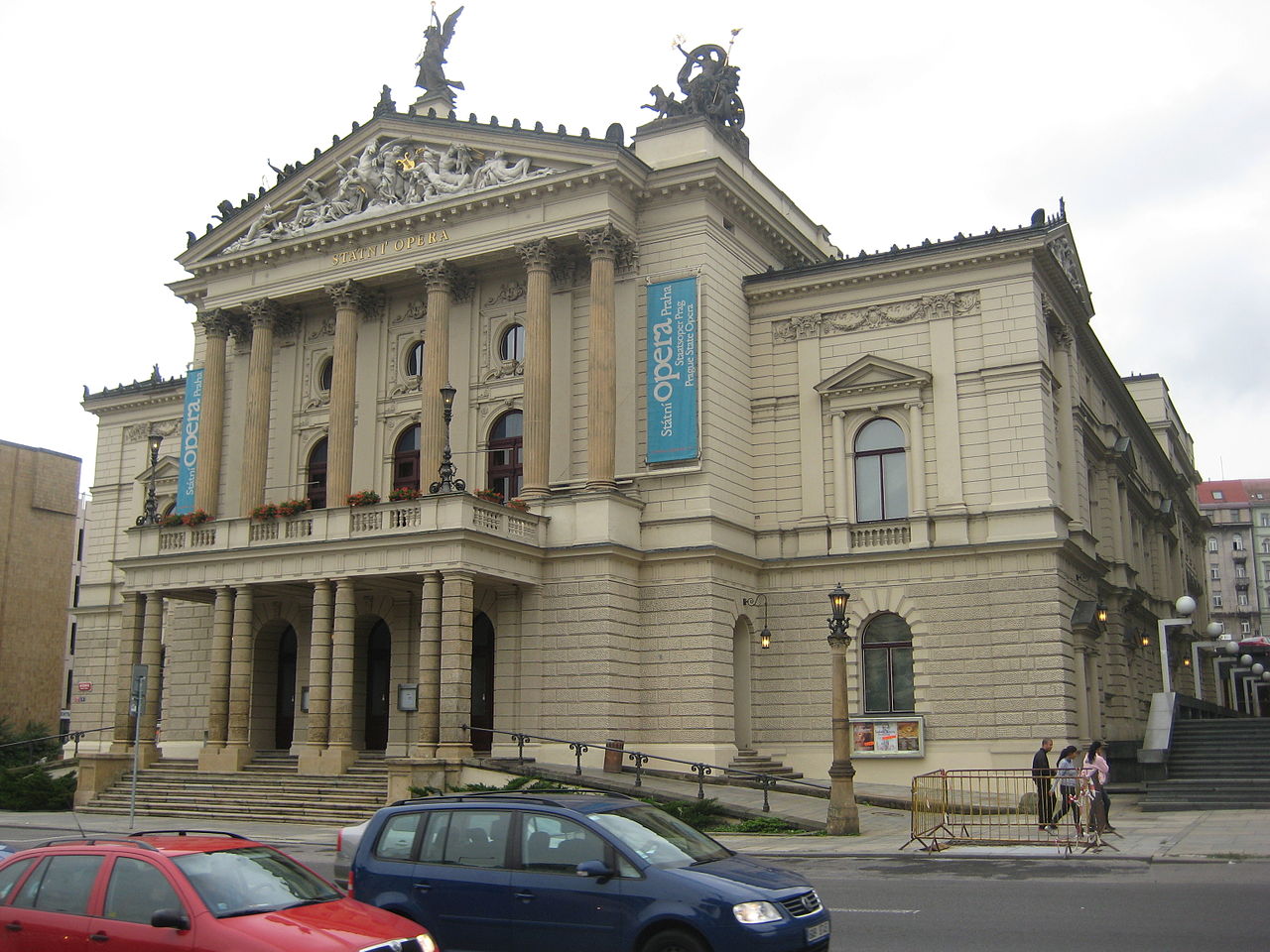
The State Opera (formerly the State Opera Prague, between 1948 and 1992 the Smetana Theatre, and originally the New German Theatre) has been a part of the National Theatre since 2012. The Opera and Ballet ensembles give repertory performances at the State Opera.
Practical information
Where to buy tickets
When purchasing tickets online, you will receive an e-ticket, which does not need to be printed—you can simply present it on your device upon entry. When available, you may also choose to collect printed tickets from the National Theatre box offices, and any tickets purchased directly at the box office will be issued in physical form.
The National Theatre sells tickets up to 6 months in advance.
Sales always start on the 1st day of the month at 9am, except in January when pre-sales do not start until the 2nd day due to a public holiday.
When do the doors open prior the show?
The National Theatre, The State Opera and the Estates Theatre are open 45 minutes prior the performance in time of increased hygiene practices. The evening box offices are open at the same time.
The main box office at the New Stage on play days is open until the beginning of the show. The New Stage auditorium is open 30 minutes prior the performance.
What kind of dress is suitable for attending the theatre?
Dress codes are only required for special events. By their appearance, the visitors indicate that they are aware of the festive occasion they are experiencing at the theatre. Persons in markedly soiled clothes and persons whose behaviour may compromise the safety of the other visitors are not allowed to enter the respective premises, or can be ejected from them.
Where do I park? How much does the parking cost?
While visiting the State Opera, you can take the slip road on Wilsonova street from the left lane close to the State Opera building to the Parking Centrum above-ground garage. The parking fee is 60 CZK/h.
Only non-cash payments: Parking fees can be paid exclusively by cashless payment card or another virtual device (watch or phone). Thank you for your understanding.”
Buffets at the State Opera
No waiting. For your benefit, please pre-order your food and beverages at the bar to minimize waiting in the queue!
Accessibility for the disabled
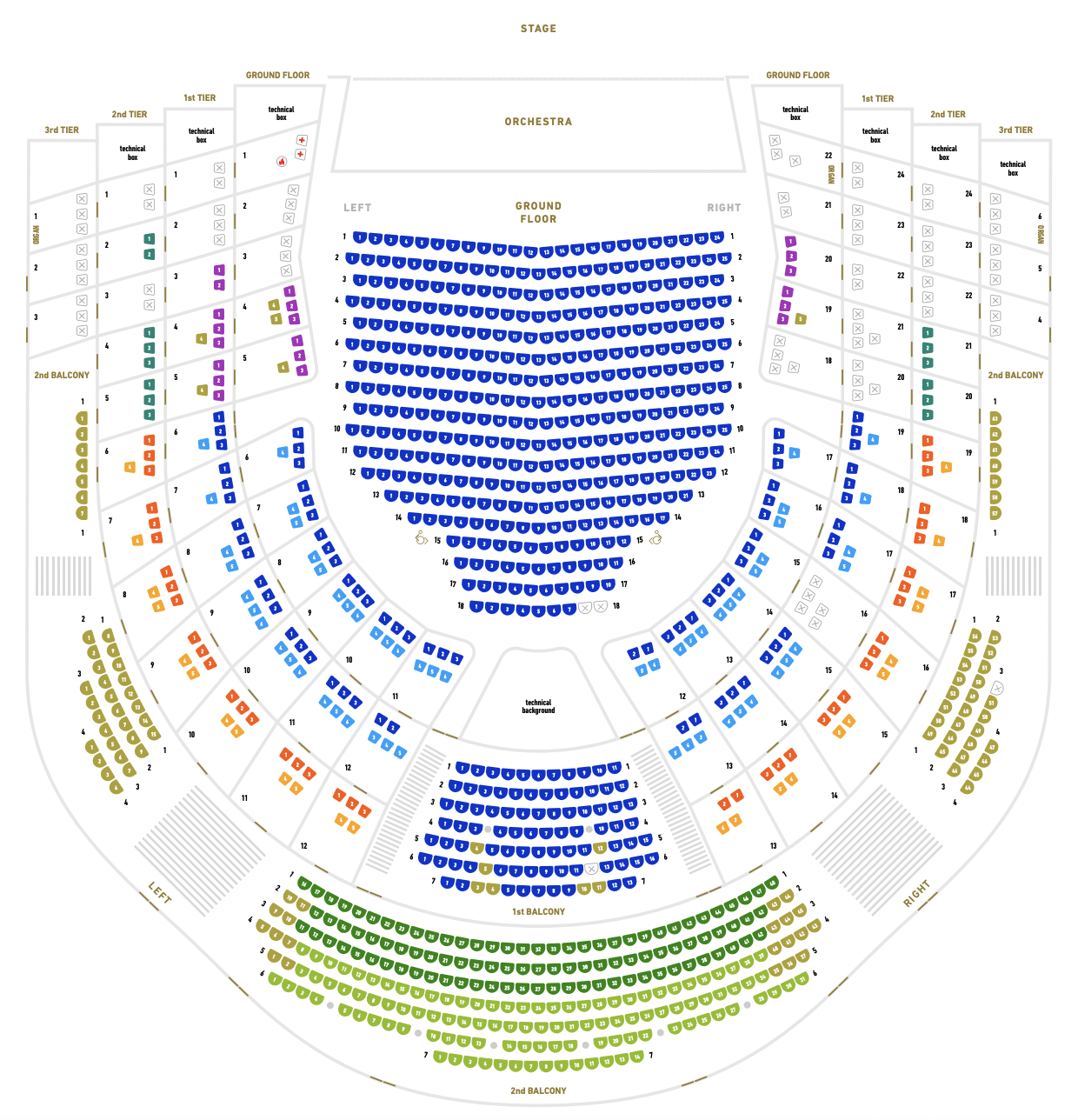
All the National Theatre venues are accessible to disabled persons, with special seats allocated for them in the auditorium. It is, however, advisable to consult each visit in advance with the National Theatre Sales Department.
Can I get an artist’s signature? Can I leave them flowers?
The National Theatre does not provide signatures of artists or contacts to them. You can leave flowers for artists performing in the show before its beginning at the theatre stuff.
History
The Prague State Opera resides in the building which on January 5, 1888 was opened as a Prague German stage with the performance of Wagner’s opera, The Mastersingers of Nürnberg. In the 19th century, Prague Germans performed in the Estate’s Theater in alternation with a Czech company. Desire for their own theater led to negotiations in 1883 for the construction of a new theater building for the German Theater Association. Over the next three years, a blueprint was drawn up and handed over to the Vienna atelier of Fellner and Hellmer. Also sharing in the design was the architect of the Vienna Municipal Theater, Karl Hasenauer, while Prague architect Alfons Wertmüller took part in the construction. Financing came from private collections. With its spacious auditorium and neo-Rococo decoration, this theater building is among the most beautiful in Europe.
Access:
By tram
By daytime tram No. 11 to the stop “Muzeum”, through the underpass beneath Legerova street in the direction of the NationalMuseum, at the crossroads turn right along the NewBuilding of the NationalMuseum.
By daytime trams Nos. 3, 9, 14 and 24 or night trams Nos. 51, 52, 54, 55, 56 and 58 to the stop “Václavské náměstí”, then by foot uphill on the left side of the Wenceslas Square to the traffic lights across Wilsonova and Vinohradská streets. Then turn left along the NewBuilding of the NationalMuseum.
By metro
To the “Muzeum” station, lines A and C (green and red), and then by foot along the NewBuilding of the NationalMuseum.
Related events